
Most people know Ben Stein as the dry economics teacher who called out “Bueller? Bueller?” to a silent classroom in 1986. Fewer know that the Ben Stein speech writer chapter came first. Before Hollywood, Benjamin Jeremy Stein was a Yale-trained lawyer who wrote for Presidents Richard Nixon and Gerald Ford in 1973 and 1974. That early, lesser-known chapter of his career explains much of what came later: the timing, the deadpan humor, and his knack for making economics sound plain. Here is the full story, from the Nixon White House to the game show stage.
| Field | Details |
|---|---|
| Full Name | Benjamin Jeremy Stein |
| Nickname/Stage Name | Ben Stein |
| Date of Birth | November 25, 1944 |
| Place of Birth | Washington, D.C., United States |
| Age | 81 (turns 82 in November 2026) |
| Nationality | American |
| Zodiac Sign | Sagittarius |
| Religion | Judaism |
| Profession/Occupation | Writer, lawyer, economist, actor, commentator, game show host, educator |
| Years Active | 1970–present |
| Education | Columbia University (B.A., Economics, 1966); Yale Law School (J.D., 1970) |
| Genre/Field | Speechwriting, economics writing, law, comedy acting, television |
| Spouse/Partner | Alexandra Denman (married 1968, divorced, remarried 1977) |
| Children | Tom Stein (adopted son) |
| Parents | Herbert Stein (economist), Mildred Stein |
| Siblings | Rachel Stein |
| Net Worth | Estimated in the tens of millions (not publicly audited) |
| Notable Works | Speechwriter for Nixon and Ford, Ferris Bueller’s Day Off, Win Ben Stein’s Money, The Wonder Years |
| Awards/Honors | Daytime Emmy Award for Outstanding Game Show Host; Yale Law School class valedictorian |
Ben Stein’s Early Life and Family Roots in Public Policy
Ben Stein was born on November 25, 1944, in Washington, D.C., into a home where economics and public policy were everyday dinner talk. His path to the White House was not an accident. He grew up surrounded by people who shaped government decisions, and he absorbed that world long before he wrote a word for a president.
His family environment gave him two things early: a comfort with complex policy ideas and a sense that government work mattered. Many future speechwriters learn the vocabulary of Washington on the job. Stein had heard it since childhood, which made his later move into the Nixon administration feel natural rather than sudden.
Growing Up in Silver Spring, Maryland
Stein spent his childhood in Silver Spring, Maryland, a suburb just outside the capital. The family home at 9342 Harvey Road placed him minutes from the federal offices where his father worked. That closeness to Washington shaped his early interests in law, writing, and the economy.
Growing up in the D.C. area also meant growing up near politics in a very real way. Neighbors worked for agencies, newspapers covered policy fights daily, and public service was a common career. For a bright, verbal kid, it was an ideal training ground for a future in government writing.
Looking back at his early life, it is easy to see the pattern. Stein was not a Hollywood kid who stumbled into politics. He was a Washington kid who later stumbled into Hollywood, and that order explains a lot about his serious side.
Father Herbert Stein in the Same Administration
His father, Herbert Stein, was a respected economist who served as chairman of the Council of Economic Advisers under Nixon and into the Ford years. This created a rare situation: father and son working in the same presidential era, inside the same White House complex, at the same time.
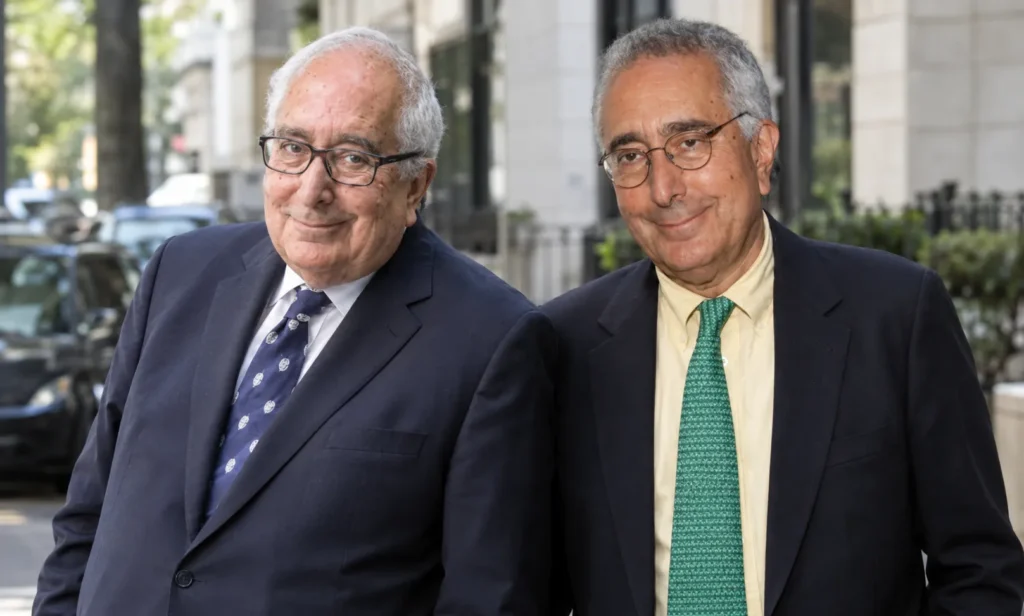
The two held very different roles. Herbert shaped economic policy at the highest level, while Ben worked in writing. Ben has spoken warmly of having lunch with his father during those years, a small detail that shows how unusual their shared experience was.
That link also helps explain why Ben’s economics knowledge later felt authentic on screen and in print. He didn’t just study the subject. He grew up with one of the country’s leading economists across the table.
Education at Columbia and Yale Law School
Stein earned his bachelor’s degree from Columbia University in 1966, graduating with honors in economics. He then went to Yale Law School and finished in 1970. His classmates elected him valedictorian, a mark of how much his peers respected his mind and his voice.
That education built the exact skills a speechwriter needs. Economics taught him to read policy and analyze information. Law school taught him to build arguments and find the strongest point in any case. Together, they trained him to explain hard ideas in plain language.
At Yale, he was also active in the Yale Political Union, a debate society where students argue resolutions in front of a crowd. Years later, he returned to give a humorous talk to the YPU, reflecting on the Yale of the sixties, the peace movement, and the “flower power generation” he studied alongside.
From my experience covering political careers, the people who thrive as speechwriters usually share one trait: they can make a complicated idea sound obvious. Stein’s mix of economics and legal training gave him that ability before he ever reached the White House.
Ben Stein’s Legal Career Before the White House
After Yale, Stein did not go straight into politics. He practiced law first, working in poverty law and later as a trial lawyer at the Federal Trade Commission (FTC). That period gave him real courtroom experience and a practical feel for how government rules affect ordinary people.
He also began writing on the side, including op-ed pieces for major newspapers. Those early columns showed his talent for clear, persuasive writing on economic and political topics. They also caught the attention of people inside the Nixon White House.
Nixon’s writing operation at the time included heavyweights such as William Safire, Pat Buchanan, Raymond Price, and Lee Huebner. Joining that group later in Nixon’s presidency required proven writing skill, and Stein’s legal and editorial work gave him the credentials to get in the door.
Ben Stein as Nixon’s Speechwriter (1973–1974)
Yes, Ben Stein really was a speechwriter for Richard Nixon. He joined the speechwriting staff in 1973 and worked there into 1974. This is confirmed by his professional biography and by the Nixon Foundation, which has introduced him at events as a former Nixon speechwriter. It is not a title invented after he became famous.
He was part of a larger team, not the head of it. His work covered remarks and messages on policy, the economy, and other topics the president needed to address. Like most staff writers, his drafts passed through several hands before reaching Nixon.
The Nixon Foundation has continued to feature him over the years, including events like the Pat Nixon centennial. That ongoing connection is one more reason the speechwriter credit is well established.
What a Presidential Speechwriter Actually Does
A presidential speechwriter turns ideas, policy, and research into words the president can deliver. The job covers everything from major addresses on foreign affairs and legislation to short remarks at events, and even messages after tragedies. The goal is always the same: capture the president’s voice, not the writer’s.
The process is a team effort. A writer researches, produces drafts, and then revises after senior staff and policy experts weigh in. The president may edit heavily or cut whole sections. A final deliverable often combines pieces from several people.
That makes it very different from writing a personal essay. As any former Nixon writer would tell you, you don’t own the words. You serve the audience and the president, which takes craftsmanship and a thick skin.
Where He Fit on Nixon’s Writing Team
Ben Stein was not Nixon’s only speechwriter. He joined an established team that had been working since the late 1960s. Understanding who else was there helps put his role in proportion.
| Speechwriter | Role in the Nixon White House |
|---|---|
| Raymond K. Price | Led the writing operation; principal author of major addresses |
| William Safire | Prominent writer known for memorable phrasing |
| Pat Buchanan | Writer and adviser known for sharp political arguments |
| Lee Huebner | Senior writer on the team |
| William Gavin | Speechwriter and contributor across the presidency |
| Kenneth Khachigian | Writer and researcher in the later Nixon period |
| Ben Stein | Staff speechwriter, 1973–1974 |
Nixon was known for giving his writers detailed instructions on tone and arguments. Stein worked within that system. His role was genuine and meaningful, but he was one contributor among many, not the sole writer.
Serving During the Watergate Era
Stein’s tenure overlapped with the most tense period of the Nixon presidency. The Watergate scandal began with the June 1972 break-in at the Democratic National Committee offices, and by 1973 widening investigations, congressional hearings, and impeachment pressure dominated Washington.
The Washington Post’s reporting, aided by the secret informant known as “Deep Throat,” kept public scrutiny intense. That informant was later revealed in 2005 as FBI official Mark Felt. Stein was never a participant in the Watergate crimes, never faced prosecution, and was not a central Watergate figure.
For a writer, that era made the job harder. Every speech was read for hidden meaning. Stein has remained a defender of Nixon’s personal side over the years, but his work during that time was writing, not involvement in the scandal itself. Nixon resigned in August 1974.
Did Ben Stein Write “I Am Not a Crook”?
No. Nixon’s famous line “I am not a crook” came from a televised question-and-answer session with newspaper editors in Orlando, Florida, in November 1973. It was not a prepared address, so no speechwriter wrote it.
The quote is sometimes wrongly pinned on Stein because people connect his speechwriter title with Nixon’s most famous quotes. In reality, Nixon said the words in response to a live question. It’s a good example of how internet myths form around a familiar name.
Did Ben Stein Write Nixon’s Resignation Speech?
No. The principal author of Nixon’s resignation speech, delivered on August 8, 1974, was Ray Price. Price was a longtime Nixon writer who had worked on both his first and last major speeches.
There is no evidence that Stein drafted the resignation address. The Nixon Foundation and historical accounts credit Price with the core drafting, with the president himself shaping the final text.
Writing Speeches for Gerald Ford
Stein also wrote speeches for Gerald Ford. When Nixon resigned and Ford took office on August 9, 1974, Stein stayed on through the transition. His bio notes that he wrote for both presidents, which makes him one of the few writers to bridge the two administrations.
Ford’s priority was restoring stability after Watergate, and that called for a new voice: calmer, plainer, and more reassuring. Writing for Ford meant adjusting tone quickly, a skill that served Stein well in every career that followed.
His time as a Ford speechwriter was short. He left government by the end of 1974 and moved into journalism and commentary, including work tied to major outlets on the editorial side.
How Speechwriting Shaped His Later Career
The skills Stein built as a speechwriter show up everywhere in his later work. Writing for the spoken word gave him an ear for rhythm and timing. That same sense of timing powers his deadpan humor in comedy, where a slow pause can land as hard as a punchline.
Speechwriting also taught him to cut excess and focus on the core argument. You can see this in his columns and books on money, where he takes technical topics and explains them to ordinary readers without jargon.
A few lasting habits from his White House years:
- Writing on deadlines — useful later in newspaper columns and TV commentary
- Accepting edits — a must in Hollywood, where scripts change constantly
- Grasping complex info fast — the basis of his economics commentary
- Speaking to a broad audience — key to teaching, speaking events, and television
In my view, this is the most underrated part of his story. People treat the speechwriter and the comic actor as two separate people, but the comic style grew directly out of the serious training.
From Washington to Hollywood
After leaving government, Stein moved into writing for papers and magazines, including the Wall Street Journal. He later relocated to California and tried his hand at Hollywood, where he pitched scripts and advised on TV projects. Many of his early pitches were rejected.
His big break came from something he never planned: his slow, monotone voice. A director heard him speak and saw comic potential. Ordinary lines delivered in Stein’s flat style turned out to be funny, and that opened the door to acting.
| Period | Career Stage |
|---|---|
| 1970–1973 | Lawyer (poverty law, FTC) and op-ed writer |
| 1973–1974 | Speechwriter for Nixon, then Ford |
| Mid-1970s onward | Columnist and writer on law and economics |
| 1986 | Breakout film role in Ferris Bueller’s Day Off |
| 1997–2003 | Host of Win Ben Stein’s Money |
| Ongoing | Commentator, author, speaker, teacher |
Ferris Bueller’s Day Off and “Bueller? Bueller?”
Stein’s most famous role is the drone-voiced economics teacher in John Hughes’s 1986 comedy Ferris Bueller’s Day Off. It was a tiny role, but it became iconic. His roll call of “Bueller? Bueller?” is now shorthand for silence and no response.
The scene worked because it was authentic. Stein actually understood economics, and his flat lecture on tariffs and the Depression was real classroom material, partly improvised. Hughes let him run with it.
The irony is hard to miss. A Yale Law grad and former presidential writer became famous for boring a room full of teenagers. That ironic fame later led to more films, TV roles, and commercials.
Win Ben Stein’s Money
From 1997, Stein hosted the trivia game show Win Ben Stein’s Money on Comedy Central. Contestants tried to win money from his own prize pool, and Stein competed against them in the final round. Jimmy Kimmel served as his co-host in the early seasons.
The show became an Emmy-winning hit, earning Daytime Emmys, including Outstanding Game Show Host. It introduced Stein to a new generation who knew nothing about his Nixon years. Reruns later aired on the Game Show Channel.
Character Actor Career
Beyond Ferris Bueller, Stein built a steady career as a character actor. He played Mr. Cantwell on The Wonder Years and appeared in comedies such as The Mask. His deadpan persona also made him a natural for voice work in animation.
He became a familiar face in commercials too, especially ones that played on his dry delivery. His official bio lists dozens of film and TV credits, almost all built around the same flat, intelligent voice.
Economist, Financial Writer, and Teacher
Outside entertainment, Stein has long worked as an economist and financial writer. He has written columns and books on investing, retirement, and money, aimed at ordinary investors rather than specialists. He also became a longtime commentator on cable news and network TV on economic issues and policy.
He has taught as well. His official bio describes his work as a professor of law and economics, including at Pepperdine University. Teaching suited him well, given that his most famous role was, fittingly, a teacher.
His finance writing tends to stress caution: saving steadily, avoiding big risks, and planning early for retirement. It is the same plain, practical style he learned writing for presidents.
Continued Ties to Nixon and the White House Legacy
Stein has stayed connected to Nixon’s legacy for decades. He has appeared at Nixon Library and Nixon Foundation events and often shares administration memories from his time on the staff.
In 2023, he spoke about Nixon’s support for Israel during the 1973 Yom Kippur War, a topic he cares about personally. He tends to stress Nixon’s human side and foreign policy record.
It’s worth noting that these are his personal views. The broader historical consensus on Nixon remains far more critical, especially because of Watergate. Stein’s loyalty is part of his story, but readers should separate it from the wider record.
Ben Stein in 2026
As of October 2026, Ben Stein is 81 years old and turns 82 in November. His career now spans more than 50 years across government, finance, law, and Hollywood.
The year 2026 also marks the 40th anniversary of Ferris Bueller’s Day Off, which brought fresh attention to the film, including anniversary screenings and reunion appearances alongside cast members such as Alan Ruck. The movie continues to reach different generations of viewers.
He remains active in writing and commentary, and his name still draws curiosity, particularly from people surprised to learn about his White House past.
Ben Stein Net Worth
Ben Stein’s net worth is widely estimated in the tens of millions of dollars, though the exact figure is not verified or publicly audited. Most numbers come from celebrity sites rather than official records.
His income has come from many sources over the years:
- Film and TV acting
- Commercials and endorsements
- Books and newspaper columns
- Speaking events
- Teaching and legal work
Because his wealth comes from so many streams, any single number should be treated as a rough estimate, not a fact.
Why People Still Search “Ben Stein Speech Writer”
The main reason is the surprise factor. People know him as the movie teacher or the game-show host, then learn he was a presidential writer and a Yale Law grad. The contrast between Hollywood and Washington makes the story irresistible.
The search also reflects a common question: was it real? Many people assume the speechwriter title is a joke tied to his comic persona. It isn’t, and that discovery keeps the topic alive online.
Frequently Asked Questions
Was Ben Stein involved in Watergate?
No. He worked as a speechwriter during the Watergate period, but he had no role in the crimes and never faced any prosecution. His job was writing, not campaign or intelligence work.
Was Ben Stein a Republican speechwriter?
Yes, in the sense that he wrote for two Republican presidents, Nixon and Ford. His later political commentary is a separate matter from that White House job, which was a staff writing role.
Did Ben Stein write all of Nixon’s speeches?
No. Nixon had a large team, including Ray Price, William Safire, Pat Buchanan, Lee Huebner, William Gavin, and Kenneth Khachigian. Stein was one contributor during 1973 and 1974.
What did Ben Stein study in college?
He studied economics at Columbia University, graduating in 1966 with honors. He then earned his law degree from Yale Law School in 1970, where he was class valedictorian.
How old is Ben Stein?
Ben Stein was born on November 25, 1944. As of September and October 2026, he is 81, and he turns 82 in November.
Is Ben Stein still known for economics?
Yes. Alongside his acting fame, he is still recognized for writing and speaking on personal finance, investing, and retirement planning, building on his long career as a financial commentator.
Read About : rick wilson