
The British Shorthair cat is one of the oldest and most popular pedigree breeds in the world, known for its round face, plush coat, and easy-going demeanor. Whether you’re drawn to the classic solid grey-blue coat or curious about a brown British Shorthair cat, this guide covers everything from history to health, so you know exactly what to expect before bringing one home.
British Shorthair Cat Quick Facts
| Field | Details |
|---|---|
| Breed Origin | Great Britain |
| Breed Type | Pedigreed, British landrace |
| Coat | Short, dense, plush |
| Common Colors | Blue, black, white, cream, red, chocolate, cinnamon, tabby, tortoiseshell, bicolour |
| Weight Range | 3–5 kg (females), 4–8 kg (males) |
| Life Expectancy | 12–20 years |
| Temperament | Calm, affectionate, independent |
| Major Registries | GCCF, CFA, TICA, FIFe |
| Average Purchase Cost | £450–£20,100 depending on pedigree line |
History and Origin of the British Shorthair
The breed’s roots trace back to ancient Roman times, when domestic shorthairs are believed to have arrived in Britain alongside the 43 CE invasion. Descended from wild native cats and random-bred domestic shorthairs, these cats adapted to island conditions long before selective breeding began.
The formal British Shorthair as we know it took shape in the late 19th century. Breeder Harrison Weir helped organize the first cat show at Crystal Palace in 1871, giving short thick coated cats public attention for the first time and setting the stage for the breed’s recognition.
The two World Wars nearly wiped out the breed. Stock shortages during WWI and WWII pushed breeders to introduce Persian and Russian Blue crosses to rebuild the type, which is part of why some early blue shorthairs carried longhair genes. This crossbreeding also damaged the gene pool temporarily, but dedicated breeders steadily regained numbers through the 1950s and beyond.
Today the British Shorthair is fully recognized by the GCCF, CFA, TICA, and FIFe, and it consistently ranks as the most popular pedigree breed in the UK, with 190,000+ GCCF-registered kittens recorded historically.
Physical Appearance of the British Shorthair Cat
A British Shorthair is instantly recognizable by its large distinctly round head, chubby cheeks, and broad face with a short muzzle. The breed has a sweet, open expression that’s often compared to Alice in Wonderland’s Cheshire Cat, thanks to its smug rounded muzzle and welcoming smile.
Their body is stocky and well-boned, with a broad chest, thick neck, and no visible neck line when viewed from the front. Legs are medium to short and sturdy, supporting a compact, semi-cobby frame. The tail is medium length and thick at the base, tapering to a rounded tip.
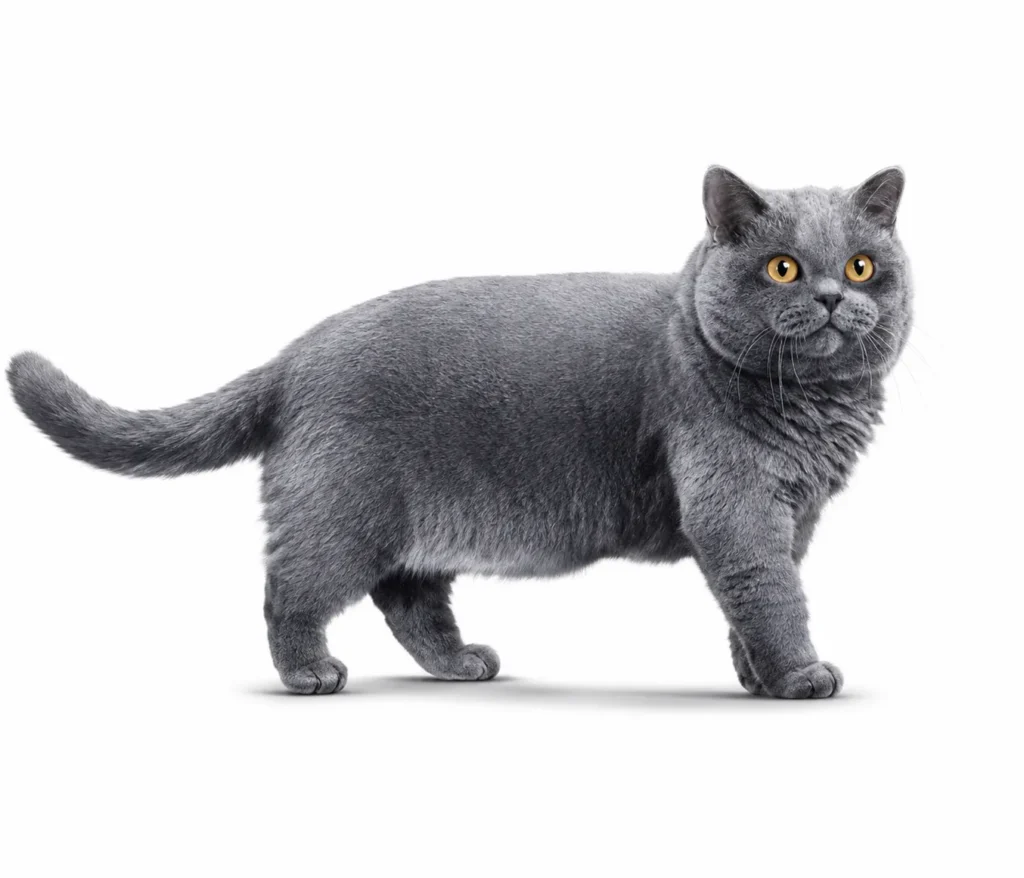
Eyes are large, round, and deeply set, most famously in a deep copper-orange shade, though eye color can vary with coat. Ears are medium, wide-set, and rounded, adding to the breed’s soft, rounded silhouette.
Adult males typically weigh 4–8 kg, while females run smaller at 3–5 kg. Because they mature slowly, British Shorthairs don’t reach full physical maturity until around 3–5 years of age.
Brown, Cinnamon and Other British Shorthair Cat Colors
While the solid grey-blue British Blue remains the most familiar variant, the breed is officially recognized in 30+ colors and patterns, including black, white, cream, red, chocolate, cinnamon, and fawn, plus tabby, tortoiseshell, bicolour, and calico combinations.
A brown British Shorthair cat usually refers to chocolate or cinnamon coloring rather than a distinct breed line. Cinnamon British Shorthair cats have a warm, reddish-brown coat caused by a diluted version of the chocolate gene, and they’re considered rarer than the classic blue.
An orange British Shorthair cat is typically classified as “red” in official breed standards, ranging from deep ginger to a lighter apricot tone, often appearing alongside tabby markings. Because of their rarity, cinnamon and brown British Shorthair cats for sale often carry a higher price tag than standard blue kittens.
Whatever the shade, all colors share the same dense, crisp-textured coat that doesn’t tangle easily, which is one reason the breed remains so easy to care for regardless of pattern.
British Shorthair Cat Temperament and Personality
British Shorthairs are known for a calm, easygoing demeanor that makes them well-suited to families, apartments, and multi-pet households. They’re generally tolerant of dogs and rabbits, though they can be less tolerant of unfamiliar cats introduced too quickly.
This isn’t a lap-obsessed breed. Most British Shorthairs prefer sitting near their owners rather than being picked up or carried, and they’ll often supervise household activity from a short distance rather than jumping into the middle of it. That said, they do welcome attention on their own terms and enjoy a gentle paw touch or sofa-snuggling session.
They’re not very vocal cats, communicating more through body language and quiet, occasional mad kitten-like bursts of energy than constant meowing. Their intelligence shows in how quickly they learn routines and adjust to household schedules.
In my experience recommending breeds to first-time owners, the British Shorthair’s independent but affectionate nature makes it one of the most forgiving cats for busy households — they’re content alone for stretches but genuinely happy when you’re around.
Grooming and Coat Care
Thanks to their short, dense coat, British Shorthairs are relatively low-maintenance. Weekly combing is usually sufficient to remove loose hair and keep the coat mat-free, since the dense plush texture doesn’t tangle the way longhaired breeds do.
During seasonal shedding in spring and fall, extra brushing helps manage the increased moulting. A curry comb or metal comb works well for pulling out loose undercoat without damaging the topcoat.
Beyond brushing, routine care should include regular claw clipping, occasional ear cleaning, and teeth brushed with vet-approved toothpaste. These habits prevent the kind of untreated dental problems that can otherwise become a major concern later in life.
British Shorthair Cat Health and Lifespan
The breed is generally robust, but two conditions deserve attention: polycystic kidney disease (PKD) and hypertrophic cardiomyopathy (HCM). PKD causes birth-present kidney cysts that can escalate toward kidney failure, so reputable breeders should screen breeding cats and buyers should always ask breeders for testing records.
HCM is a genetic heart disease that reduces the heart’s blood pumping volume and doesn’t always show early symptoms beyond tiredness or fainting. A Danish study following 329+ cats found HCM present in a small but notable percentage of the population, which is why an echocardiogram from a veterinary cardiologist is recommended for breeding males especially.
On the whole, British Shorthairs enjoy a solid life expectancy of 12–20 years, with a median lifespan often cited around 12.5 years in UK-based studies. Annual vet visits, portion control to prevent obesity, and awareness of blood type (many carry blood type B, relevant for transfusions) all support long-term health.
Nutrition and Feeding Tips
Because British Shorthairs have a sedentary lifestyle and moderate activity level, portion control is important to prevent weight gain — a diet-related medical condition this breed is genuinely prone to given its size and build.
Feed high-quality food with strong meat content, split into two daily meals rather than free-feeding, which discourages overeating driven by boredom rather than hunger. Kittens typically need more frequent, smaller meals to fuel muscle development during their slow maturation.
Fresh water should always be available, and wet food can help cats that don’t drink enough on their own. Avoid sugary treats and excess food, and instead use play — teaser toys, laser pointers, or short fetch training sessions — to burn calories and tone muscle between meals.
British Shorthair Cat Price: How Much Do They Cost?
British Shorthair kittens vary widely in price depending on color, pedigree line, and breeder reputation. Standard blue kittens tend to sit at the lower end of the market, while rarer colors like cinnamon or chocolate British Shorthair cats for sale often command a premium.
At the high end, show-quality or championship-line kittens have sold for anywhere between £450 and £20,100, reflecting the massive range between pet-quality and competition-grade bloodlines. Estimated lifetime cost should also factor in food, grooming supplies, and the vet screenings mentioned earlier for PKD and HCM.
When comparing a British Shorthair cat’s price across breeders, always weigh the number against health testing documentation — a cheaper kitten from an unscreened line can cost far more in vet bills down the road.
Finding a British Shorthair Cat for Sale
If you’re searching for a British Shorthair cat for sale, start with breeders registered under a major body like the GCCF, CFA, TICA, or FIFe, since registration typically means health screening standards are being followed.
Ask to see British Shorthair cat images of the actual kitten and its parents rather than stock photos — this helps confirm coat color, body type, and general condition before you commit. Reputable breeders are usually happy to share health certificates for PKD and HCM alongside these photos.
Be cautious of listings offering rare colors like orange or cinnamon British Shorthair cats for sale at unusually low prices, as this can be a sign of unscreened or poorly bred litters.
Frequently Asked Questions
How much is a British Shorthair cat?
Prices vary from around £450 for pet-quality kittens up to £20,100 for show-quality or championship-line cats. Color, pedigree, and breeder reputation are the biggest factors driving the price difference.
What is the rarest British Shorthair cat color?
Cinnamon and chocolate are among the rarer British Shorthair colors, since they require a specific diluted gene combination. This rarity is part of why brown British Shorthair cats for sale often cost more than standard blue kittens.
Are British Shorthair cats good with children and other pets?
Yes, they’re generally patient with kids and tolerant of dogs and rabbits, making them a solid choice for multi-pet households. They can be slower to warm up to unfamiliar cats, though.
Do British Shorthair cats like to be held?
Not usually. Most British Shorthairs prefer sitting nearby or on your lap rather than being picked up or carried, and they’ll signal displeasure if handling feels forced.
How long do British Shorthair cats live?
Life expectancy typically ranges from 12 to 20 years, with a median around 12.5 years in health studies. Regular vet checks and weight management support a longer lifespan.
Is an orange British Shorthair cat a different breed?
No — an orange British Shorthair cat is simply classified as “red” under official color standards. It’s the same breed, just a different coat color, often paired with tabby markings.
Read About : Arthritis