
Dick York is best remembered as the first Darrin Stephens on Bewitched, the actor whose warm, comic timing helped make the show a hit between 1964 and 1969. Behind that success, though, York carried a permanent back injury and a painkiller addiction that quietly shaped nearly every choice of his later career. His story is one of early promise, sudden stardom, and a health-driven downfall that pushed him out of Hollywood and, eventually, into hardship.
Dick York Biography Table
| Field | Details |
|---|---|
| Full Name | Richard Allen York |
| Date of Birth | September 4, 1928 |
| Place of Birth | Fort Wayne, Indiana |
| Date of Death | February 20, 1992 |
| Age | 63 |
| Nationality | American |
| Religion | Catholic |
| Profession/Occupation | Actor |
| Years Active | Early 1940s – 1980s |
| Education | Parochial school; studied drama at DePaul University |
| Spouse | Joan Alt York |
| Children | Five (including Mandy, Kim, Christopher, Matthew, and Stacy) |
| Net Worth | Roughly $1,000 at time of death |
| Height | 6’1″ |
| Notable Works | Bewitched, They Came to Cordura, Inherit the Wind, Going My Way |
Early Life and Family Background
Richard Allen York was born on September 4, 1928, in Fort Wayne, Indiana, into a working-class household. His father worked as a salesman while his mother took in sewing as a seamstress to help support the family, and money was tight from the start.
The family later relocated to Chicago, where York attended parochial school and was introduced to performing through the Jack and Jill Players, a children’s theater group. A Catholic nun at St. Mary of the Lake noticed his acting talent early and encouraged him to pursue it, a moment York credited in a 1989 interview as the real beginning of his career.
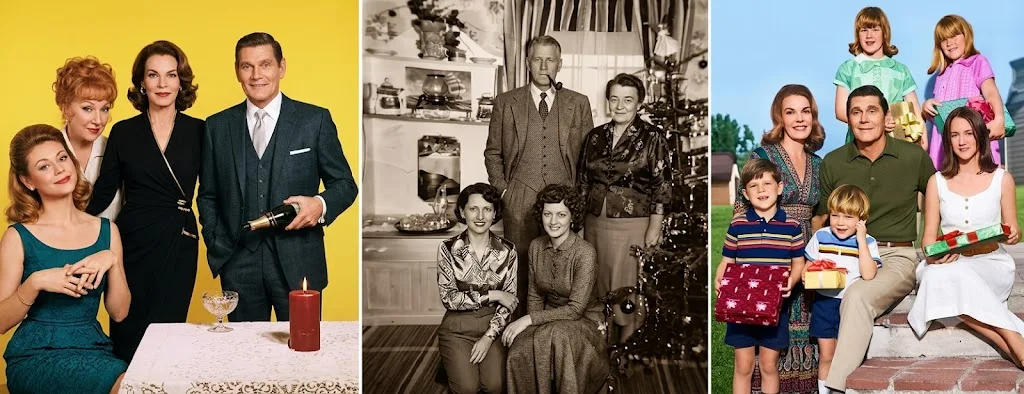
By age 11, York was already doing voice work on CBS radio, playing a fish in a production called Water Babies and later taking small parts in shows like That Brewster Boy. At 15, he landed the role of Bernard in a network radio drama, an early sign of the natural talent that would carry him into Broadway and film.
York’s childhood was also marked by loss. The death of his baby brother left a lasting mark on the family, and by his own account, the working-class struggle at home pushed him toward performing as both an escape and a genuine calling. He briefly studied drama at DePaul University before committing fully to acting.
Radio, Broadway and Early Film Career
York’s path to stardom ran through New York City, where he made his Broadway debut in 1951. Within a few years he was working steadily in live television, appearing in dramas that were common training grounds for actors of his generation, including Father Knows Best and Alfred Hitchcock Presents.
His film breakthrough came through Columbia Pictures, and by the late 1950s he was a familiar face in Hollywood. He appeared alongside major stars of the era, including Gary Cooper, Rita Hayworth, Deborah Kerr, Paul Muni, and Joanne Woodward, across films like Inherit the Wind, Tea and Sympathy, and Going My Way.
Television work continued to build his profile through the early 1960s. York guest-starred on Wagon Train, Rawhide, The Twilight Zone, Dr. Kildare, and The Untouchables, while also working with directors like Leo G. Carroll. In 1962, he married his childhood sweetheart, Joan Alt, and the couple would go on to have five children together.
By 1959, York had built a respectable career as a working actor known for range across radio soap operas, single-season television roles, and film. What audiences didn’t know was that a set injury that same year would quietly define the rest of his professional life.
The Cordura Set Injury and Its Long-Term Impact
While filming They Came to Cordura in 1959, York was performing a pumping scene on a railway handcar opposite Gary Cooper. Playing an extra’s full load fell on him, and when he grabbed the rail to keep from being hurt, he tore muscles on the right side of his back.
The injury was not treated properly at the time, and York kept working rather than taking the recovery he needed. In a 1992 interview, he explained that the studio simply had him cut from certain scenes rather than address the underlying damage, a decision that would plague him for the rest of his life.
His career did not end immediately after the injury, but the permanent, disabling back injury never fully healed. Painkillers became part of his daily routine to manage the pain well before Bewitched ever began, setting the stage for the addiction that would later cost him everything.
Why Did Dick York Leave Bewitched?
Dick York’s exit from Bewitched came down almost entirely to his declining health. Chronic back pain from the unresolved Cordura injury worsened steadily through the show’s run, and by season five the pain had become debilitating enough to affect his work on set.
Filming was repeatedly delayed as York’s condition worsened. Crew members recalled him lying down between takes, sometimes passed out from exhaustion or medication, while producers arranged on-set accommodations like a slanted wall and lighter doors to ease the physical strain of simply moving through scenes.
Matters came to a head when York was hospitalized following a business trip, missing several episodes during season six. He had discussed leaving the show as early as 1968, but it was this hospitalization, combined with the addiction to codeine and other prescription painkillers, that made his departure unavoidable.
York left Bewitched in 1969 with no hard feelings toward the show or its cast, and William Asher and the network handled his exit respectfully. Still, the departure marked the end of his most visible role and the beginning of a much harder chapter in his life.
Dick York vs Dick Sargent: What Happened After His Exit
Dick Sargent formally took over the role of Darrin Stephens for Bewitched’s final seasons, six through eight, running from 1969 to 1972. The show gave no real on-screen explanation for the change, treating it much like other silent cast swaps of the era.
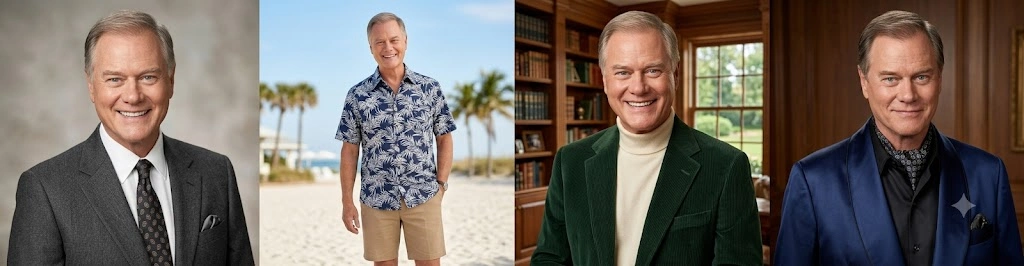
Elizabeth Montgomery, who played Samantha throughout the entire run, worked with both actors and the show continued largely without disruption to its ratings, though longtime viewers noticed the shift immediately. York, for his part, never publicly criticized Sargent or the production for the recasting.
The comparison between the two actors has followed the show ever since, with York generally remembered as the original and more beloved Darrin, largely because his three years with Samantha and Endora, played by Agnes Moorehead, coincided with the show’s peak popularity and its Emmy nomination in 1968.
Life After Bewitched: Struggles, Poverty and Painkiller Addiction
Leaving Bewitched did not solve York’s health problems, and his career never recovered. Through the 1970s he took on minor guest roles on shows like The Rockford Files, Fantasy Island, and Simon & Simon, but steady work became increasingly rare.
By 1971, York’s addiction to prescription painkillers was full-blown, and he made the decision to quit cold turkey. The six-month withdrawal was brutal, but he succeeded, later writing about the ordeal in his memoir as one of the hardest periods of his life.
Financial hardship followed close behind his health struggles. York and his family relied on Screen Actors Guild pension payments and unemployment checks, living on roughly $650 a month at points during the 1970s and 1980s. Reports describe periods bordering on homelessness for the family.
Despite everything, York found purpose later in life. In the early 1980s, he founded a charity called Acting for Life to raise money and awareness for homelessness, phoning politicians and businesspeople directly from his bed in Michigan during his final, mostly bedridden years.
Dick York’s Wife and Family
Dick York married Joan Alt in 1962, and the couple remained together until his death three decades later. Joan stood by him through the Cordura injury, the Bewitched years, the painkiller addiction, and the financial hardship that followed his departure from Hollywood.
Together they raised five children, and Joan Alt York was present with him at Blodgett Hospital in Michigan when he died in 1992. There is no public record suggesting York’s personal life involved anything beyond this long, stable marriage and his role as a father.
Dick York Cause of Death: How Did Dick York Die?
Dick York died on February 20, 1992, at Blodgett Hospital in Michigan, at age 63. The official cause of death was complications from emphysema, a condition closely tied to his long-time, three-pack-a-day smoking habit.
By his final years, York required supplemental oxygen just to get through daily life and was largely confined to bed. He was survived by his wife, Joan, and their five children, and was buried at Plainfield Cemetery in the East Grand Rapids area, close to where the family had settled.
Dick York’s Net Worth at Death
Despite decades of steady film and television work, Dick York’s estimated net worth at the time of his death was strikingly small, around $1,000. Years without regular acting income, mounting medical needs, and reliance on a modest SAG pension left almost nothing in savings.
His financial story stands in contrast to his career highlights, underscoring just how completely the back injury and addiction derailed his earning potential after Bewitched ended. For a man who once shared the screen with Gary Cooper, it’s a sobering reminder of how quickly Hollywood income can dry up once steady work disappears.
Dick York’s Movies and TV Shows
York’s filmography reflects a working actor’s range across radio, film, and television:
- Bewitched (1964–1969) — Darrin Stephens
- They Came to Cordura (1959) — the film where his career-defining injury occurred
- Inherit the Wind (1960)
- Going My Way
- Tea and Sympathy
- Wagon Train, Rawhide, Dr. Kildare, The Twilight Zone, The Untouchables — guest television roles
- Father Knows Best, Alfred Hitchcock Presents, The Alfred Hitchcock Hour — early TV appearances
- High School U.S.A. — one of his final screen credits
FAQs
What was Dick York’s cause of death?
Dick York died from complications of emphysema on February 20, 1992, at age 63. His long-time smoking habit, roughly three packs a day, was the primary driver behind his declining lung health in his final years.
Why did Dick York leave Bewitched?
York left Bewitched due to chronic back pain from a permanent injury suffered while filming They Came to Cordura in 1959. The pain, worsened by years of on-set strain and a prescription painkiller addiction, led to hospitalization and made continuing the role impossible.
Who replaced Dick York on Bewitched?
Dick Sargent took over the role of Darrin Stephens starting in 1969, playing the character through the show’s final run until it ended in 1972.
What was Dick York’s net worth when he died?
Dick York’s estimated net worth at the time of his death was about $1,000. He lived on roughly $650 a month in his final years, relying on his Screen Actors Guild pension and unemployment support.
Did Dick York recover from his painkiller addiction?
Yes. In 1971, York quit prescription painkillers cold turkey after years of dependence tied to his back injury. The withdrawal took about six months and was extremely difficult, but he successfully overcame the addiction.
Was Dick York gay?
There is no public evidence to support this claim. York was married to Joan Alt from 1962 until his death in 1992, and the couple raised five children together throughout their thirty-year marriage.
What did Dick York do after leaving Bewitched?
After leaving the show, York took occasional guest roles on series like The Rockford Files and Simon & Simon, but his career never fully recovered. In the early 1980s, he founded Acting for Life, a charity focused on raising awareness and support for homelessness, which he ran largely from his bed in his final years.
Conclusion
Dick York’s story goes far beyond his three seasons as the original Darrin Stephens. A single on-set injury in 1959 quietly shadowed the rest of his career, leading him through addiction, financial hardship, and years out of the spotlight before his death in 1992. Yet even in his hardest years, he found purpose helping others, leaving behind a legacy shaped as much by resilience as by his time on Bewitched.
Read About : henry cavil