
Few directors have shaped modern pop culture quite like Tim Burton. From gothic horror to whimsical fantasy, his fingerprints are on some of the most recognizable films of the last four decades. This guide covers his life, career, films, characters, and everything fans search for when they type in Tim Burton’s name.
Biography Table
| Field | Details |
|---|---|
| Full Name | Timothy Walter Burton |
| Date of Birth | August 25, 1958 |
| Place of Birth | Burbank, California |
| Age | 67 (as of 2026) |
| Nationality | American |
| Zodiac Sign | Virgo |
| Profession/Occupation | Director, Producer, Screenwriter, Animator |
| Years Active | 1980s–Present (30-plus year career) |
| Education | California Institute of Arts (CalArts), animation major |
| Genre/Field | Gothic horror, dark comedy, fantasy, animation |
| Dating/Relationship Status | Previously in relationships with Lisa Marie (1992–2001) and Helena Bonham Carter (2001–2014) |
| Children | Son Billy (born October 2003), Daughter Nell (born December 2007) |
| Parents | Father William, a Parks and Recreation staffer; Mother Jean, a gift shop owner |
| Siblings | Brother Daniel |
| Net Worth | $100 million |
| Height | 5 feet 11.5 inches |
| Notable Works | Beetlejuice, Batman, Edward Scissorhands, The Nightmare Before Christmas, Sleepy Hollow, Corpse Bride, Charlie and the Chocolate Factory |
| Awards/Honors | Multiple Academy Award nominations for his films; Oscar wins for Best Art Direction and Best Costume Design (Alice in Wonderland) |
Who Is Tim Burton?
Timothy Walter Burton was born on August 25, 1958, in Burbank, California, a suburb that would later shape much of his cinematic imagination. He grew up idolizing Vincent Price, a fascination that eventually surfaced in his own filmmaking. That childhood obsession with horror and the macabre never really left him.
Burton studied animation at the California Institute of Arts, where he sharpened the visual language that would define his career. His early apprenticeship as an animator at Walt Disney Studios gave him technical grounding, even though his sensibilities never quite fit the traditional Disney mold. He was, from the start, an outsider working inside the system.
His 1982 short film Vincent, an homage to his idol Vincent Price, marked his first real artistic statement. It was dark, stylized, and deeply personal, foreshadowing decades of work built around loners, outcasts, and misunderstood monsters. That short film is often cited as the purest distillation of his aesthetic.
Today, Tim Burton is regarded as one of Hollywood’s most distinctive directors, known for blending gothic horror with dark comedy and heartfelt storytelling. Whether people search “tim burton movies,” “tim burton net worth,” or “how old is tim burton,” the answers all trace back to a career built on consistent, unmistakable style.
Tim Burton Movies: A Career Built on the Strange and Beautiful
Tim Burton’s filmography spans roughly 18 to 20 feature films, ranging from animated masterpieces to live-action blockbusters. His breakout came with Pee-wee’s Big Adventure in 1985, a low-budget comedy that showcased his knack for quirky characters and visual flair despite a modest $6 million budget.
Beetlejuice followed in 1988 and remains one of his most beloved works. The afterlife comedy, starring Michael Keaton and Winona Ryder, combined puppetry, practical effects, and dark humor into something that felt entirely new. It grossed $40 million domestically on a tiny budget and cemented his reputation as a visual original.
Batman (1989) pushed Burton into blockbuster territory, reshaping the superhero genre with a brooding, German Expressionist-inspired Gotham. The film’s $411 million worldwide gross proved that his gothic sensibility could work at scale, setting a template that superhero movies followed for years afterward.
His other major works include Edward Scissorhands, Ed Wood, Sleepy Hollow, Sweeney Todd, Charlie and the Chocolate Factory, and Alice in Wonderland, the latter grossing over $1 billion worldwide. Not every film has landed with critics or audiences; Dark Shadows and Planet of the Apes are often cited among his weaker efforts, showing the rollercoaster quality of his output over a 30-plus year career.
Notable Tim Burton Films at a Glance
| Film | Year | Domestic Box Office | Worldwide Box Office |
|---|---|---|---|
| Beetlejuice | 1988 | $40 million | — |
| Batman | 1989 | $251 million | $411 million |
| Edward Scissorhands | 1990 | $56 million | $86 million |
| Sleepy Hollow | 1999 | $101 million | $206 million |
| Charlie and the Chocolate Factory | 2005 | $206 million | $475 million |
| Sweeney Todd | 2007 | $53 million | $152 million |
| Alice in Wonderland | 2010 | $334 million | $1.025 billion |
| Dark Shadows | 2012 | — | $246 million |
| Miss Peregrine’s Home for Peculiar Children | 2016 | — | — |
| Beetlejuice Beetlejuice | 2024 | — | — |
Tim Burton Characters: Outsiders, Loners, and Misfits
A recurring thread runs through nearly every Tim Burton character: the outcast searching for belonging. Edward Scissorhands, Jack Skellington, and Ichabod Crane all share a sense of not quite fitting into the world around them. This theme has become something of a signature, appearing in film after film regardless of genre.
Edward Scissorhands is arguably the most personal of these creations, a Frankenstein-like figure dropped into a pastel suburb that has no idea what to do with him. Johnny Depp’s portrayal, paired with Burton’s own experiences growing up in Burbank, gave the character an emotional weight that elevated the film beyond simple fantasy.
Beetlejuice, the “ghost with the most,” represents a different kind of Burton character: chaotic, anarchic, and gleefully macabre. Michael Keaton’s performance turned the character into a cultural icon, one strong enough to anchor a sequel, Beetlejuice Beetlejuice, more than three decades later.
Villains in Burton’s world are rarely simple. Catwoman and Penguin in Batman Returns carry genuine pathos beneath their menace, while the Mad Hatter in Alice in Wonderland blends whimsy with real instability. This complexity is part of why his characters have stayed culturally relevant across generations.
Tim Burton’s Wife and Personal Relationships
Tim Burton has never legally married, despite having two long-term partnerships that shaped much of his personal life. He was previously linked briefly to German artist Lena Gieseke, but his most publicly known relationships came later in his career.
He was in a relationship with model and actress Lisa Marie from 1992 to 2001, a nine-year partnership that overlapped with some of his most prolific filmmaking years, including Batman Returns, Ed Wood, and Sleepy Hollow.
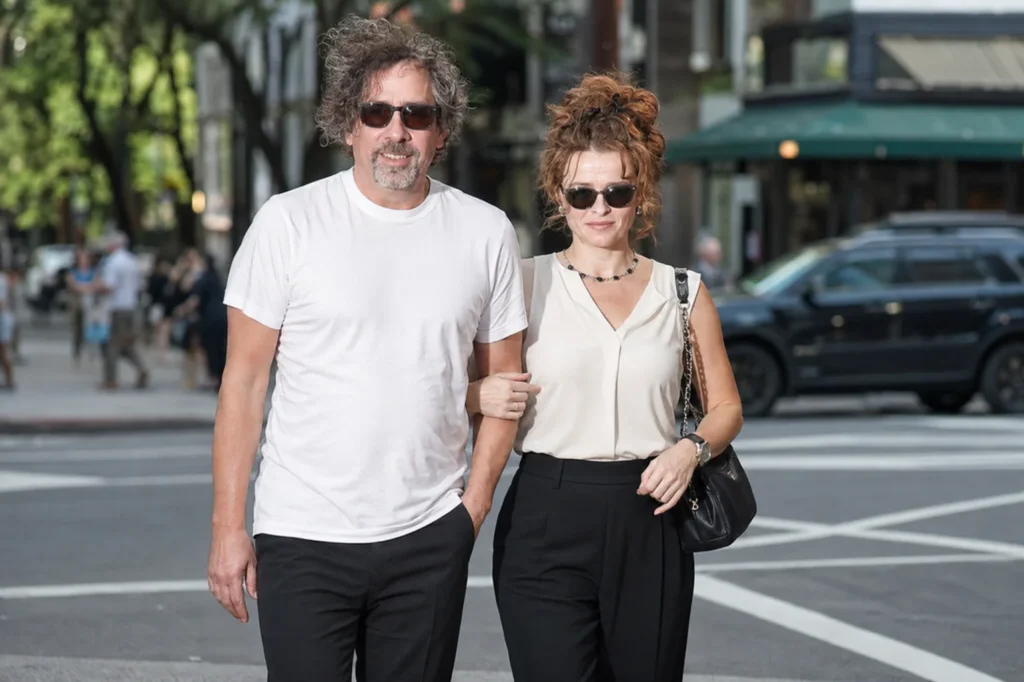
His relationship with actress Helena Bonham Carter, a frequent collaborator in his films, lasted from 2001 to 2014. The couple had two children together, son Billy, born in October 2003, and daughter Nell, born in December 2007. They separated amicably in 2014 after 13 years together, though Bonham Carter continued appearing in his projects afterward, including Dark Shadows and Miss Peregrine’s Home for Peculiar Children.
Despite decades in the public eye, Burton has kept much of his personal life private, rarely discussing his relationships in interviews. What’s clear is that his partners, particularly Bonham Carter, played a visible creative role in shaping several of his best-known films.
Tim Burton’s Batman: Reinventing the Caped Crusader
Before Tim Burton took on Batman in 1989, the character was still associated in the public mind with the campy 1966 Adam West series. Burton’s version, starring Michael Keaton as Bruce Wayne and Jack Nicholson as the Joker, completely reshaped how audiences saw the character.
The film leaned into a brooding, gothic version of Gotham City, drawing heavily on German Expressionist design principles. Anton Furst’s art direction won an Academy Award, and Danny Elfman’s score became instantly iconic, both contributing to a tone far darker than anything in prior Batman media.
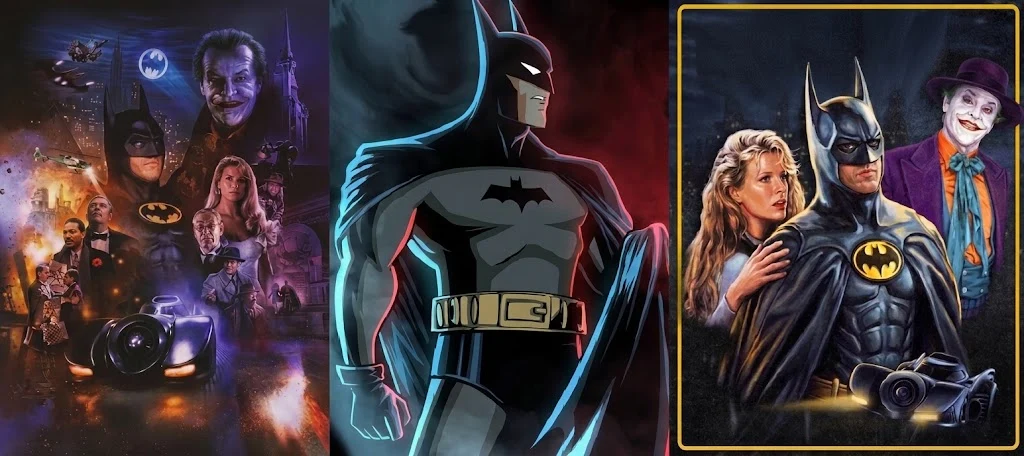
Batman Returns followed in 1992, pushing even further into dark territory with Michelle Pfeiffer’s Catwoman and Danny DeVito’s Penguin. The sequel leaned into political satire and sexuality, elements that made it more divisive but also more artistically ambitious than its predecessor.
Burton’s Batman films are widely credited with establishing the modern template for superhero cinema, proving that comic book movies could carry genuine artistic weight. Christopher Nolan and other directors who later reshaped the genre owe a clear debt to Burton’s initial vision.
Coraline, Tim Burton, and the Stop-Motion Connection
One of the most persistent misconceptions online involves Coraline and Tim Burton’s exact role in it. While Burton is often associated with the film due to its visual style, Coraline was directed by Henry Selick, a longtime collaborator of Burton’s, and produced by Laika, not Burton himself.
The confusion largely stems from The Nightmare Before Christmas, which Burton conceived and produced but which Selick actually directed. Both films share a similar stop-motion aesthetic, gothic charm, and offbeat characters, which is likely why audiences frequently link them together.
Burton’s actual stop-motion directing credits include Corpse Bride in 2005, a Victorian-set folk tale about a deceased bride, made with Mike Johnson as co-director. The film earned an Oscar nomination for Best Animated Feature and grossed $117 million worldwide on a modest $40 million budget.
Frankenweenie, his 2012 stop-motion feature, expanded on his original 1984 short film about a boy who resurrects his dog using science inspired by Frankenstein. It also received an Oscar nomination, reinforcing Burton’s reputation as one of animation’s most distinctive voices, even in projects he didn’t personally direct.
Tim Burton’s Museum Exhibitions and Artistic Legacy
Beyond filmmaking, Tim Burton is a prolific visual artist, known for carrying pocket-sized notebooks and small watercolor kits wherever he goes. His artwork has been the subject of major museum exhibitions across the world, cementing his reputation as more than just a director.
The most significant showcase, “The Art of Tim Burton,” debuted in 2009 and has traveled to institutions including the Museum of Modern Art in New York, the Los Angeles County Museum of Art, and the Seoul Museum of Art. The exhibition features roughly 700 drawings, paintings, and pieces of original artwork spanning his career.
His art has also appeared at the Cinémathèque Française, the Stone Bell House in Prague, the Australian Centre for the Moving Image, and the Neon Museum in Las Vegas. These exhibitions typically pair sketches and concept art with props and costumes from his films, giving fans insight into his creative process.
Burton has also published books of his artwork, including The Melancholy Death of Oyster Boy & Other Stories and The Napkin Art of Tim Burton, both showcasing the same macabre, whimsical style found throughout his films.
Tim Burton’s Net Worth and Career Earnings
Tim Burton’s net worth is estimated at around $100 million, built over a career spanning more than four decades of directing, producing, and screenwriting. His earnings come from a combination of directing fees, producer credits, and box office bonuses tied to his biggest hits.
Alice in Wonderland remains his highest-grossing film, pulling in over $1 billion worldwide on a $200 million budget, a rare billion-dollar milestone that significantly boosted his career earnings. Charlie and the Chocolate Factory also performed strongly, grossing $475 million worldwide.
Beyond directing, Burton has earned steady income through producer credits on projects he didn’t direct himself, including Coraline and various stop-motion collaborations with Henry Selick. His involvement in television, including Netflix’s Wednesday, has also added new revenue streams later in his career.
Given his continued output, including Beetlejuice Beetlejuice in 2024, Burton’s net worth is likely to keep growing as he remains active in both film and television well into his late sixties.
How Old Is Tim Burton and What’s Next for His Career
Tim Burton was born on August 25, 1958, making him 67 years old as of 2026. Despite entering his late sixties, he remains one of the most active directors of his generation, continuing to produce visually distinct work decades after his debut.
His recent output, including Beetlejuice Beetlejuice in 2024, shows no signs of creative slowdown. The sequel marked a return to the tone and style that made his early work so beloved, blending practical effects with the same gothic humor that defined the original 1988 film.
Burton’s longevity in an industry that often sidelines directors past a certain age speaks to his continued relevance. His willingness to work across animation, live-action, television, and stage productions has kept his career remarkably diverse.
Looking ahead, fans continue to speculate about future projects, given his history of alternating between passion projects and studio collaborations. Whatever comes next, it’s likely to carry the same unmistakable visual signature that has defined Tim Burton’s work since Vincent in 1982.
FAQs
How old is Tim Burton?
Tim Burton was born on August 25, 1958, making him 67 years old as of 2026. He remains active in both film and television despite his decades-long career.
Who is Tim Burton’s wife?
Tim Burton has never officially married. His most notable long-term relationships were with Lisa Marie from 1992 to 2001 and actress Helena Bonham Carter from 2001 to 2014, with whom he has two children.
What is Tim Burton’s net worth?
Tim Burton’s net worth is estimated at approximately $100 million, built through decades of directing, producing, and screenwriting across major studio films and personal projects.
Did Tim Burton direct Coraline?
No, Tim Burton did not direct Coraline. The film was directed by Henry Selick, a frequent collaborator of Burton’s, and produced by Laika. The confusion often comes from their shared stop-motion, gothic visual style.
What is Tim Burton’s most successful movie?
Alice in Wonderland (2010) is Tim Burton’s highest-grossing film, earning over $1 billion worldwide. Charlie and the Chocolate Factory and Batman also rank among his top commercial successes.
What genre is Tim Burton known for?
Tim Burton is best known for gothic horror, dark comedy, and fantasy films featuring outcast characters, macabre humor, and a distinctive visual style influenced by German Expressionism and classic horror films.
Has Tim Burton won an Oscar?
Tim Burton himself has not won a competitive Oscar for directing, but his films have won Academy Awards in categories like Best Art Direction and Best Costume Design, notably for Alice in Wonderland and Batman.
Read About : shaq